

MEDIA & PUBLICATIONS
Behind Brazil's "Unbeaten Record" in SEP Litigation: Licks Attorneys' Shenzhen Strategy

Licks Attorneys, a leading Brazilian law firm, has recently been approved to establish a representative office in Shenzhen, becoming the first Latin American law firm authorized to maintain a permanent presence in China. This development has attracted widespread attention across the industry.
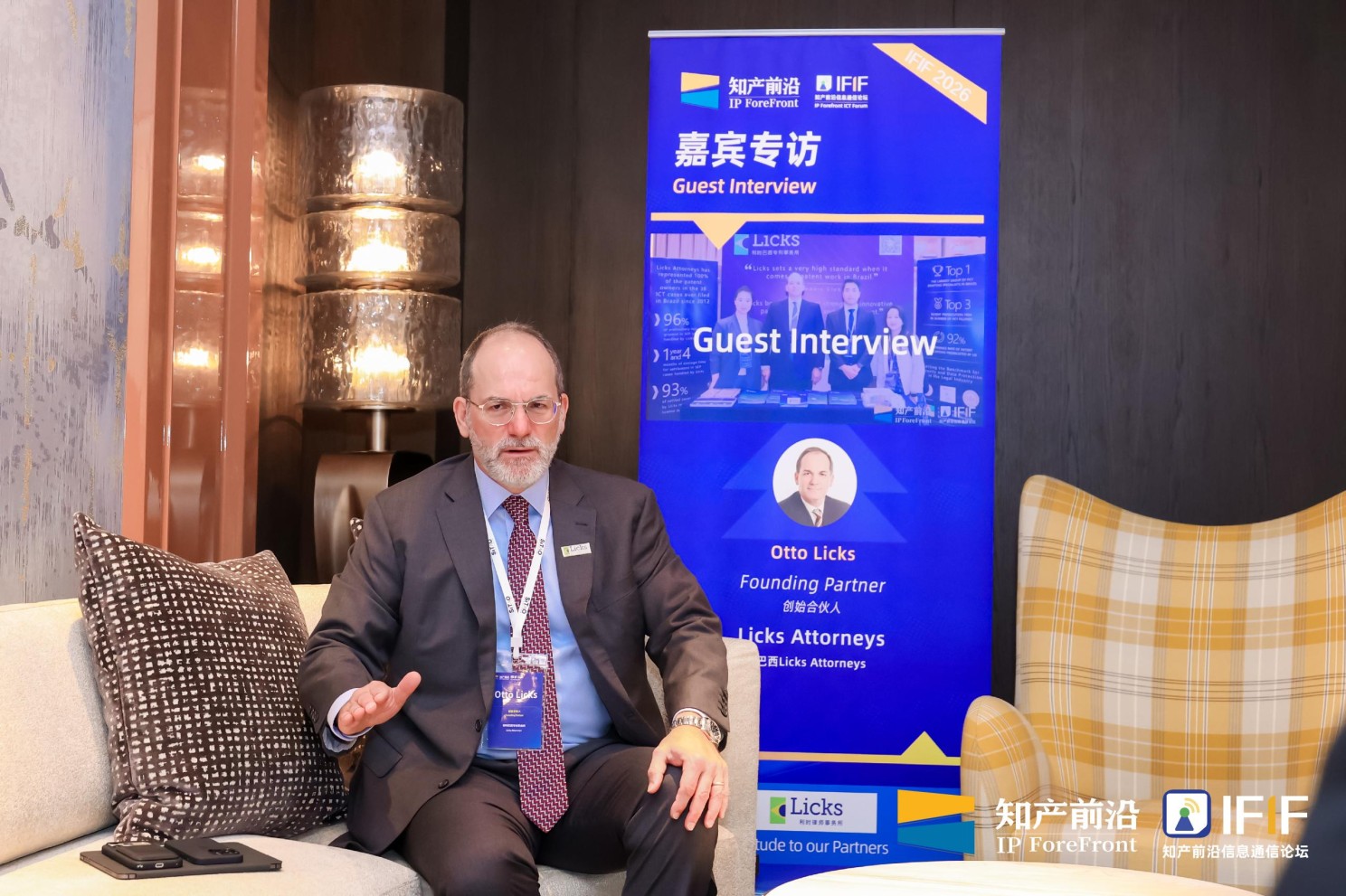
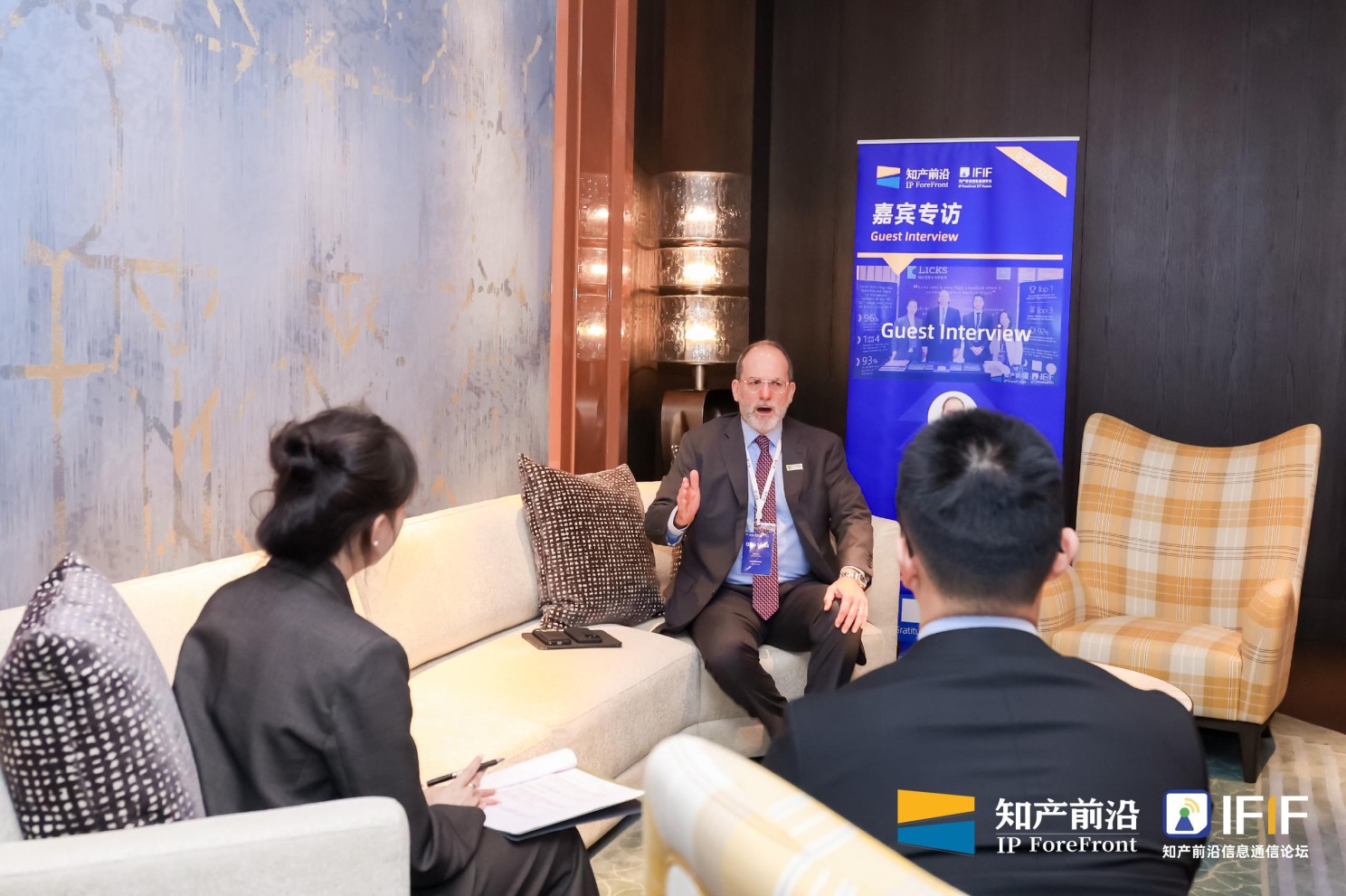
During IFIF 2026, recently held grandly in Shenzhen, IP ForeFront conducted an exclusive interview with Otto Licks, founding partner at Licks Attorneys. Drawing on his long-standing experience serving Chinese enterprises and his frontline litigation observations in Brazil, this article seeks-through Shenzhen as a strategic vantage point-to examine the interaction between China's rule - of - law - based business environment and Brazil's legal system. It further analyzes Brazil's strategic position within the global SEP landscape and outlines the key legal and compliance risks faced by Chinese companies in their outbound expansion.
I. Long-Term Service to Chinese Clients: Establishing a Presence in Shenzhen
When discussing the establishment of the Shenzhen office, Otto Licks first traced the origins of the firm's engagement with the Chinese market. More than a decade ago, he first visited China, and since then has consistently provided legal services to Chinese companies in Brazil, particularly in patent litigation and dispute resolution, accumulating extensive experience.
"We have been serving Chinese clients for over fifteen years," he stated. "We are therefore very familiar with both the Chinese market and Chinese enterprises. The Shenzhen office is not the starting point of this relationship, but rather a natural extension of our long-term service to Chinese clients."
As one of the most influential law firms in Brazil in the field of patent disputes, Licks Attorneys is known for its deep involvement in high - technology cases, particularly those related to information and communication technology (ICT). The firm has more than 350 professionals across multiple offices in Brazil and regularly handles large-scale disputes characterized by technical complexity and high monetary value. Its team is especially active in standard-essential patent (SEP) litigation and is among the few in Brazil combining technical expertise with substantial litigation experience.
In its collaboration with Chinese companies, the firm has maintained an "undefeated record to date" -whether representing patent holders as plaintiffs or defendants accused of infringement, consistently securing favorable judgments or settlements.
"We have served Chinese clients for over fifteen years and have never lost a single patent litigation case for a Chinese client." he said. This track record has enabled the firm to build trust with major Chinese technology companies such as Huawei and ZTE. Over the past year, the firm secured a significant victory for Huawei in Brazil against Taiwan-based MediaTek and represented ZTE in litigation against Samsung of South Korea, further strengthening its relationships with leading Chinese enterprises.
II. Why Shenzhen: From Client Distribution to Industrial Logic
Otto emphasized that the key to entering the Chinese market lies not in whether to enter, but in where to enter.
"If we had to choose one city, it would certainly be Shenzhen," he said. "As the ‘Silicon Valley of China,' Shenzhen is our ideal location. Choosing Shenzhen is clearly a strategic decision focused on technology and innovation."
This decision is underpinned by a clear industrial rationale. On the one hand, Shenzhen and the Greater Bay Area host a dense concentration of companies in telecommunications, devices, semiconductors, and internet services, forming a complete value chain from standard-setting and technological R&D to global expansion. On the other hand, the region connects the domestic market with international capital and serves as a central node for global litigation and licensing strategies.
"Our clients are primarily from the technology sector, and their R&D, intellectual property management, and commercial decision-making are highly concentrated in Shenzhen," he noted. "We also assist various technology clients with regulatory matters, including establishing operations in Brazil, exporting products to Brazil, and obtaining approvals from relevant authorities for the sale of equipment."
Speaking of client presence, he stated candidly: "Brazil is not only Huawei's largest market outside China, but Huawei is also the largest supplier of telecommunications infrastructure in Brazil." Within this business model-where products are designed globally in Shenzhen and implemented in Brazil-locating the representative office in Shenzhen means positioning legal services at the source of product definition and market decision-making, rather than intervening only after disputes arise.
III. The Brazilian Market: Openness Coexisting with Compliance Requirements
Within the global industrial landscape, Brazil plays a triple role: the largest economy in Latin America, a major global consumer market for smart devices, and a regional hub for manufacturing and infrastructure development. On the one hand, Chinese equipment, devices, electric vehicles, and internet services have rapidly expanded in Brazil, with "Chinese elements" permeating everyday consumer life-from telecommunications infrastructure to cross-border e-commerce. On the other hand, as Chinese companies continue to scale their operations locally, compliance requirements in areas such as competition law, data protection, taxation, and intellectual property have correspondingly increased.
Otto Licks emphasized that this combination of "high growth + high requirements" makes Brazil a frontline testing ground for corporate legal and compliance capabilities. He noted: "Whether a market is open, whether regulation is applied equally, and whether the judiciary is predictable directly determine whether companies are willing and confident to make long-term investments."
Brazil's legal environment is characterized by notable openness and fairness. "Brazil has no bias against China, Chinese businesses, or Chinese people," Otto said. "Chinese companies enjoy full freedom to participate in the market just like any other company. There are no restrictions, no constraints, and no special taxes."
From an industry perspective, the smartphone sector serves as an important lens through which to observe the Brazilian market. Brazil is not only the world's fifth-largest smartphone producer but also the largest consumer market in Latin America. Chinese brands and supply chains have become an indispensable force locally, with presence across both mid-range and high-end segments. Telecommunications equipment, electric vehicles, and cross-border e-commerce have likewise demonstrated rapid growth, underscoring the key role played by Chinese companies across multiple sectors.
However, market openness does not negate compliance obligations. Otto cautioned: "As market scale expands, compliance requirements increase in parallel. Regardless of where a company comes from, Brazilian courts will strictly apply domestic law." He added that the core issue facing Chinese companies in Brazil is not "whether they can enter," but "how to operate sustainably within the regulatory framework," particularly in areas such as data protection, antitrust, tax reporting, and intellectual property enforcement.
Consistent with global trends, markets in Latin America, India, and Southeast Asia share similar characteristics: strong growth potential and high margins, but relatively complex legal systems. Without early compliance planning, operational risks can increase significantly. In this context, Otto stressed the importance of proactive legal strategies.
IV. Drivers of SEP Disputes in Brazil
Global disputes concerning standard-essential patents (SEPs) have shown two major trends in recent years: expansion from traditional smartphone industries into emerging sectors such as IoT, automotive, and electric vehicles; and geographic expansion from mature jurisdictions in Europe and the United States to emerging markets such as Brazil, India, and Southeast Asia. As the largest ICT market in Latin America, Brazil-ranking among the top globally in both smart device consumption and production-has become a key locus for the growth of SEP cases.
Otto identified three core drivers behind the increase in SEP disputes in Brazil:
- Market size and production capacity: Brazil ranks seventh globally by population but fifth in the smartphone market and is also the world's fifth-largest smartphone producer. Its large consumer base and domestic manufacturing capacity have attracted companies from China, South Korea, Europe, and the United States to compete in the market.
- High profit margins: Brazilian consumers frequently replace devices, often own multiple devices, and purchase through diverse channels (typically directly from manufacturers rather than relying on operator subsidies), ensuring relatively high sales margins. Otto emphasized: "High profits make it easier for companies to overlook licensing obligations, while patent holders must resort to litigation or negotiation to ensure that licensing agreements are concluded."
- Unpaid patent licensing fees: Some companies fail to pay for the technologies they use, forcing SEP holders to take legal action. Otto explained: "In Brazil, we have assisted Huawei in bringing actions against local and multinational companies that failed to pay licensing fees. Successful judgments or favorable settlements in such cases not only protect rights holders but also set benchmarks for the industry."
This trend is not unique to Brazil. Globally, SEP licensing disputes increasingly reflect a model driven by "profit incentives + legal risk management." In Europe and the United States, licensing negotiations are relatively mature, and companies typically secure licenses before product launch. In contrast, in emerging markets such as Brazil, India, and Southeast Asia, the combination of complex regulatory environments and rapid market growth makes litigation and negotiation integral components of corporate strategy.
Otto noted that Chinese companies operating in Brazil must understand the intersection between global SEP frameworks and local judicial practice: "In Brazil, you cannot simply apply European or U.S. models. Legal systems, the speed of patent enforcement, judicial tendencies, and technical evaluation standards all require strategies tailored to local conditions." The Licks team represents rights holders in all SEP cases it handles in Brazil and is well-versed in how courts assess FRAND principles, injunctions, and damages, enabling it to translate case experience into market entry strategies and negotiation leverage.
He further observed that the expansion of global SEP disputes requires companies to integrate patent strategy at the business planning stage rather than responding retrospectively. In Brazil, the advantages of early planning are particularly pronounced: evaluating patent portfolios prior to market entry, negotiating licensing terms in advance, and incorporating licensing costs into product design and pricing strategies can significantly reduce the likelihood of subsequent legal disputes.
V. Managing SEP Risk Proactively: Global Experience and Brazilian Practice
Otto emphasized that the core of SEP risk management lies in proactivity and integration-embedding legal strategy into business decision-making processes rather than reacting after the fact. He outlined three practical approaches:
1.Integration into the business model
Companies should assess the impact of patent licensing costs on market competitiveness at the product design stage, ensuring profitability after payment of royalties. Otto stated: "This is established global practice and is particularly critical in Brazil. In European and Asian markets, budgeting for licensing costs in advance has become standard; in Brazil, this is even more important due to the strict application of local law by courts."
2.Risk assessment based on technical configuration
Different functionalities correspond to different patent portfolios. Companies should estimate potential costs in advance and forecast possible licensing fees based on global SEP case data. Otto noted: "In Brazil, we conduct detailed analyses of clients' product functionalities, calculate licensing costs associated with each technology, and develop tailored strategies based on local case law and settlement data."
3.Building cross-disciplinary capabilities
Companies should establish coordination across patents, litigation, regulation, and business strategy. Teams may include former judges, former ambassadors, and former members of the WTO and WIPO to provide guidance at the intersection of global and local rules. Otto added: "Multinational companies must recognize that enforcement standards differ across jurisdictions. Our team helps clients effectively integrate global experience with local practice."
He further warned: "If a company can only remain profitable by not paying licensing fees, it must reassess its market entry strategy." In Brazil, operating within the regulatory framework is essential, not only to mitigate legal risks but also to safeguard brand reputation and supply chain stability.
In light of global trends, Otto recommended that companies incorporate SEP risk management into a full lifecycle strategy - from product development, supply chain selection, and market entry to pricing, licensing negotiations, and potential litigation. This approach not only reduces risk but also enhances bargaining power in global SEP negotiations and supports long-term expansion in Latin America, Southeast Asia, and other emerging markets.
Ⅵ. Moving Legal Services Upstream: From Market Entry to Strategic Participation
In Otto's view, the significance of establishing a representative office in Shenzhen lies not only in serving companies that have already entered the Brazilian market, but also in moving legal support upstream.
Through proactive legal services, companies can develop integrated planning across product development, patent portfolio strategy, regulatory review, export approvals, and dispute management. This model aligns with Brazilian legal requirements while drawing on practices from Europe and Asia:
- Early involvement in commercial decision-making: legal teams assess SEP licensing risks prior to product launch, facilitating faster decision-making in global markets;
- Embedding legal services into global strategy: extending from Shenzhen to Brazil and other Latin American markets to provide a unified cross-border SEP management framework;
- Reducing uncertainties in globalization: combining local law, international standards, and industry practices to enable more stable global operations.
For Chinese technology companies, this proactive and globally oriented legal support model helps reduce risks, improve market entry efficiency, and strengthen bargaining power in SEP negotiations in Brazil and worldwide.
Conclusion
The establishment of a representative office in Shenzhen by Licks Attorneys-marking the first permanent presence in China by a Latin American law firm-sends a clear signal: in Brazil, a high-value market characterized by both opportunities and challenges, legal services are shifting from reactive "firefighting" to full lifecycle strategic support.
By positioning itself in Shenzhen, Licks is able to provide integrated, "one-stop" support-combining local responsiveness with a global perspective-across key stages including R&D project initiation, patent portfolio planning, market access, compliance management, and SEP dispute resolution. For Chinese technology companies, Shenzhen is not only a hub of innovation but also a strategic gateway to Brazil and the broader Latin American market. The Licks team has long represented companies such as Huawei and ZTE in high-value SEP litigation and injunction proceedings in Brazil, maintaining an "undefeated record" for Chinese clients and facilitating global licensing settlements in multiple cases, thereby delivering tangible commercial outcomes.
As Otto noted, moving legal services upstream to the source of decision-making-allowing law firms to participate in product design, pricing, and licensing strategy-is a critical pathway for navigating Brazil's FRAND framework and enhancing market certainty and competitiveness. As more Chinese companies incorporate Brazil and Latin America into their global strategies, the "Shenzhen + Brazil" cross-border legal services model represented by Licks Attorneys is evolving from a case-specific innovation into an emerging industry standard, providing more systematic and predictable legal and compliance support for Chinese companies expanding abroad.

RECENT PUBLICATIONS
-

Brazilian Court-appointed expert reports demonstrate SEP owners’ FRAND compliance: Comparable licenses can lead to evidence-based preliminary injunctions
October 05, 2026 -
Licks Advogados realiza evento com John Cioffi, o pai do DSL
October 01, 2026 -

Licks Attorneys | Patent Prosecution Made Simpler, Faster, and More Efficient
September 30, 2026
LINKEDIN FEED

FOLLOW US ON SOCIAL MEDIA