

Building a strong and enforceable patent portfolio in Brazil: beyond composition of matter

Eduardo Hallak and Rafaella Oliveira of Licks Attorneys explain how pharmaceutical companies can build stronger and more enforceable patent portfolios in Brazil by going beyond composition-of-matter patents and strategically protecting incremental innovations.
"While composition-of-matter patents remain the cornerstone of exclusivity, a strong portfolio in Brazil must rely on a diverse set of incremental patents."
Brazil is a jurisdiction in which incremental pharmaceutical innovation can be meaningfully protected if applicants understand the stringent standards applied by the BRPTO and prepare strategically from the drafting stage. While composition-of-matter patents remain the cornerstone of exclusivity, a strong portfolio in Brazil must rely on a diverse set of incremental patents, each with its own requirements, challenges, and enforcement pathways.
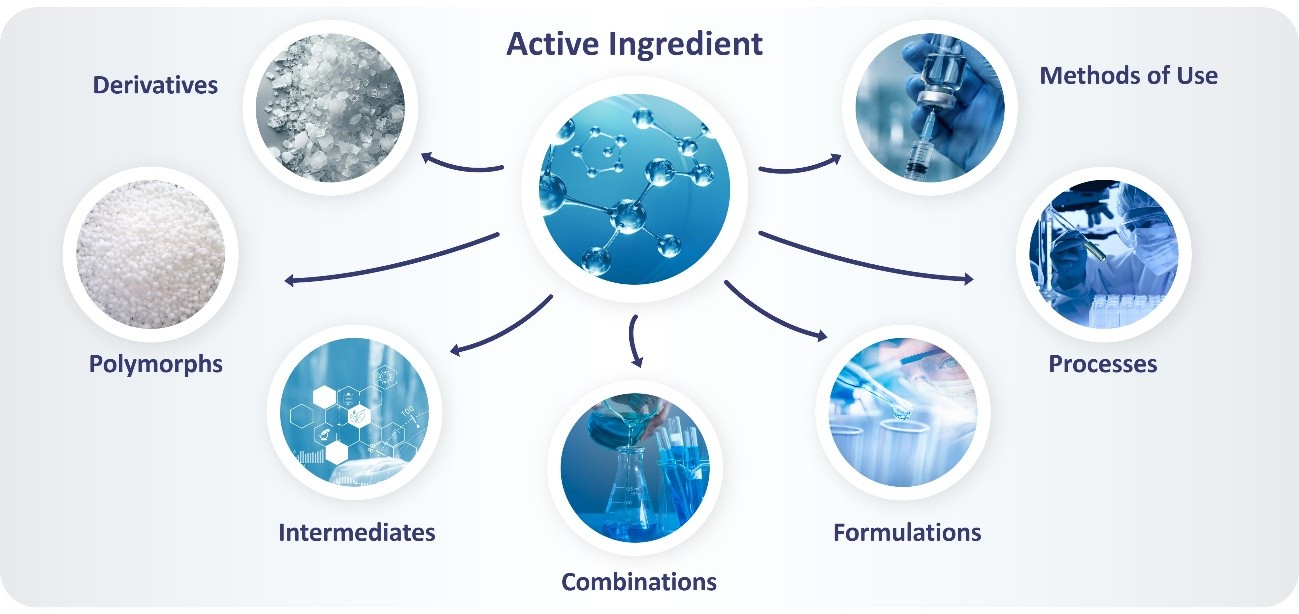
Figure 1. Overview of the principal forms of innovation that may be protected around an active ingredient.
Understanding the differences between the patentability standards is essential for developing a layered and strong patent portfolio capable of maximizing protection throughout the product incremental lifecycle. The sections below discuss some of the most relevant and challenging forms of innovation under Brazilian patent practice, highlighting their key patentability requirements, prosecution hurdles, and drafting considerations.
New use of known compounds
The current acceptable format for claiming medical uses in Brazil is the “Swiss-type” format (“Use of a compound X, characterized by being for the manufacture of a medicament for the treatment of disease Y”). This format must be applied regardless of whether it is the first, second, or subsequent use.
Notwithstanding this structural homogeneity, second and further medical uses are subject to a markedly more stringent substantive examination. In practice, the BRPTO applies heightened scrutiny to these inventions, particularly with respect to novelty and enablement. This examination framework was, until June 2026, primarily governed by Chapter 9 of the Examination Guidelines for Patent Applications in the Chemical Field (BRPTO’s Rule No. 208/2017), and is now governed by BRPTO’s Ordinance No. 80/2026, which revoked that Chapter.
Important to highlight that for a second medical use to be considered novel by the BRPTO, it must relate to the treatment of a disease different from the one for which the compound is already known in the prior art. The BRPTO deems characteristics such as dosage regimen and/or patient groups to pertain to therapeutic methods rather than to the use of the compound in the manufacture of a medicament. As a result, Examiners disregard such features when assessing novelty.
Notwithstanding the above, for a second medical use to be considered by the BRPTO duly enabled and, consequently, for the claims to be considered supported by the specification, the application, as originally filed, must present enough evidence of the claimed use to ensure that the asserted technical effect is not merely speculative. In this context, BRPTO’s Ordinance No. 80/2026 foresees the possibility of accepting post-filing data, provided that the application as originally filed contains sufficient information to render the claimed use credible. For new medical uses, in vitro, ex vivo, or in silico data can serve as a basis for claiming therapeutic activity, though the BRPTO considers in vivo data preferable for validating such an effect. In any case, if the application includes only instructions, research plans, descriptions of incomplete studies, or trials, the medical use will not be considered enabled.
Drafting tip: Ensure that the specification as originally filed includes sufficient experimental basis to avoid being deemed speculative, thereby allowing post•filing data as a supplemental measure.
Polymorphs
Although patentable in Brazil, the BRPTO has specific Guidelines that establish rigorous criteria for compliance with patentability requirements. The result is that around 40% of patent applications directed to a crystalline form are rejected in Brazil on the grounds of: (i) lack of novelty (64%); (ii) obviousness (30%); and (iii) lack of enablement, clarity and precision (6%).[1]
For the purpose of assessing the novelty of crvstalline forms, the BRPTO requires the physicochemical characterization data of the solid compound described in the prior art, which can be submitted either at the time of filing or during substantive examination. The absence of such data to enable a direct comparison with the claimed crystalline form commonly leads to the rejection of applications on the grounds of lack of novelty.
In addition, to be deemed inventive, the applicant must be able to demonstrate, bi,' means of comparative data, which may be submitted during examination, that the claimed crvstal form presents a non-obvious propertv or a technical advancement over the solid form known from the prior art, as the BRPTO understands that the identification of crystalline forms of a compound constitutes a routine task in the industrv for the improvement of physicochemical properties.
Last but not least, for a proper enablement of a crystalline form, the specification as originally filed must contain identification data obtained through physicochemical characterization techniques for solids. In this context, single-crystal XRD is the only isolated technique deemed sufficient by the BRPTO for the proper characterization of the crystalline structure of a solid. In the absence of this data, XRPD must be combined with other techniques so that such combination is sufficient for an unequivocal identification. Additionally, although examination practice is not entirely consistent on this point, it is common for the BRPTO to require the incorporation of such data into the independent claims in order to achieve a clear and precise definition of the claimed crystalline form.
In addition to physicochemical characterization data, the specification as originally filed must disclose sufficient process parameters for obtaining the crystalline form, so as to enable a person skilled in the art to reliably reproduce the claimed subject matter.
Drafting tip: Include multiple characterization techniques and detailed crystallization parameters to ensure enablement and reproducibility.
Stereoisomers
It is possible to protect a stereoisomer of a known compound in Brazil, if it was not specifically disclosed in the prior art. Once the compound has already been disclosed in the prior art as a stereoisomeric mixture, such as a racemic mixture, the pure enantiomeric or atropisomeric compounds themselves are not considered new, since the stereoisomeric mixture already contains both stereoisomers. In case of diastereoisomers, novelty will be established when the prior art does not specifically describe the claimed diastereoisomer. In some cases, the assessment of novelty of the claimed diastereoisomer only becomes possible through the submission of characterization data of the known compound, either at filing or during examination, so that a comparison can be made between the claimed diastereoisomer and the prior art.
Apart from the above, for the BRPTO, the clear and sufficient description of the stereoisomer in pure form lies in the characterization of the absolute configuration of its chiral center at the time of filing of the patent application. Additionally, the parameters of the process of obtaining the stereoisomer, either by asymmetric synthesis or by purification process subsequent to the synthesis of the compound should be described in the specification as originally filed, to ensure reproducibility by a person skilled in the art.
Moreover, it is also necessary to demonstrate the unexpected technical effect of the claimed stereoisomer over the prior art compound, since the BRPTO understands that, when the prior art compound purpose is known, there is an expectation that the pure stereoisomer of this compound presents this same property. Thus, it is considered that a person skilled in the art would be motivated to obtain this stereoisomer with the purpose of identifying the most appropriate form for industrial use, for example, the more active stereoisomeric form.
Drafting tip: Provide the characterization of the absolute configuration of the chiral center along with the parameters of the process of obtaining the stereoisomer to ensure enablement and reproducibility.
Combinations
Combination claims are allowable once the interaction between the associated compounds produces an unexpected effect, such as, for instance, a synergistic or supra-additive effect, which does not correspond to an additive effect, that is, the mere sum of individual effects of each compound of said combination. Proof of the unexpected effect obtained from a combination frequently involves presentation of data that enables a comparison between the effects observed for the respective compounds when used separately and those obtained from a combination of these compounds under the same experimental conditions. Post-filing data may be submitted for this purpose, provided that the technical effect of the invention was described in the specification as originally filed, even if not in a quantitative manner.
Drafting tip: Provide support for synergistic effect to be proved during examination.
"instance, in the case of analogous processes, the steps are generally well known to a person skilled in the art, and a simple generic mention of the method is sufficient."
Processes
Properly drafted process claims define: the starting material, the product obtained, and the means of transforming the former into the latter; and the various steps necessary to achieve the proposed objective.
The parameters involved in the process do not necessarily need to be specified in detail. For instance, in the case of analogous processes, the steps are generally well known to a person skilled in the art, and a simple generic mention of the method is sufficient.
Drafting tip: Although Brazilian law provides for a reversal of the burden of proof in cases involving process patents, the inclusion of clear and identifiable process markers can significantly strengthen the evidentiary basis for infringement analyses and facilitate the demonstration that a third party is practicing the claimed process.
Combining practice and patent drafting to ensure strong and enforceable patents
Building a robust portfolio in Brazil requires not only technical compliance with BRPTO’s Guidelines but also foresight into enforcement scenarios. Drafting must anticipate both examination hurdles and litigation realities, ensuring that patents are not only granted, but also enforceable and strong enough to remain valid after facing challenges by third parties.
In this context, it is important to anticipate BRPTO’s objections from drafting, for example, by including multiple characterization techniques for polymorphs and stereoisomers, ensuring credible disclosure at filing for new medical uses, and providing comparative data up front or making sure that the specification allows supplementation during examination.
Moreover, patent applications may be drafted with enforcement considerations in mind. For example, claims may be tailored to encompass the technologies of greatest commercial value, while the specification may incorporate identifiable process markers capable of supporting future infringement analyses. Likewise, claims may be drafted broadly enough to capture inevitable off-label use, thereby mitigating the impact of skinny-labeling strategies adopted by generic manufacturers.
Once granted, patents in Brazil tend to enjoy a relatively high degree of legal stability. The likelihood of invalidation, whether through an administrative nullity proceeding (PGO), which may be filed before the BRPTO within six months from the granting date, or through a judicial nullity action filed before the Federal Courts, which may be brought at any time during the patent term, remains comparatively low. This is reflected in Brazil's modest patent invalidation rate. Notably, as can be seen from Figure 2, among the PGO decisions issued over the last 12 months, only 26.06% resulted in the patent being completely revoked.
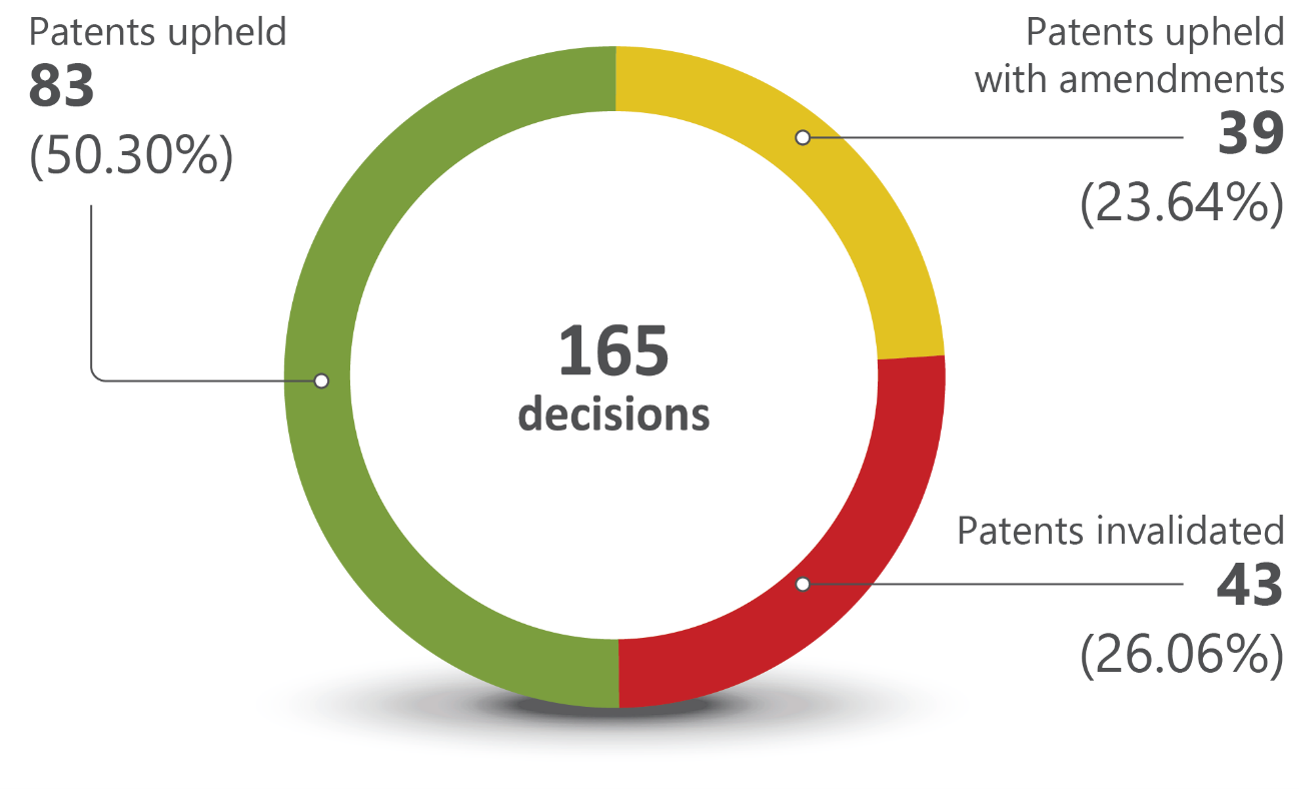
Figure 2. Outcomes of PGO proceedings decided in the last 12 months (up to August 5, 2026).
Conclusion
While composition-of-matter patents remain the cornerstone of exclusivity in the life sciences sector, a robust patent strategy in Brazil should not rely on a single layer of protection. By combining different categories of incremental patents, such as new medical uses, polymorphs, stereoisomers, combinations, manufacturing processes, and formulations, applicants can build a diversified and resilient portfolio capable of extending and reinforcing market exclusivity well beyond the expiry of the original compound patent.
Success, however, depends not only on identifying protectable innovations, but also on anticipating the strict standards applied by the BRPTO and the practical challenges of enforcement. Careful drafting supported by robust technical data, a thorough understanding of Brazilian examination practice, and claims strategically tailored to facilitate future infringement analyses can substantially enhance both patentability and enforceability. When these elements are considered from the outset, incremental patents become far more than defensive filings: they become valuable commercial assets capable of supporting long-term market protection, strengthening competitive positioning, and maximizing the return on innovation in the number one pharmaceutical market of Latin America.
[1] Considering the decisions published between Jan/2024 and May/2026.

ABOUT US
Licks Attorneys Patent Blog provides regular and insightful updates about patents. The posts are authored by the firm’s team of seasoned legal professionals. Licks Attorneys is a top tier Brazilian law firm, specialized in Intellectual Property and recognized for its success handling large and strategic projects in the country.
LINKEDIN FEED

FOLLOW US ON SOCIAL MEDIA