

Law #15,385/2026: A New Framework for Oncology Technologies
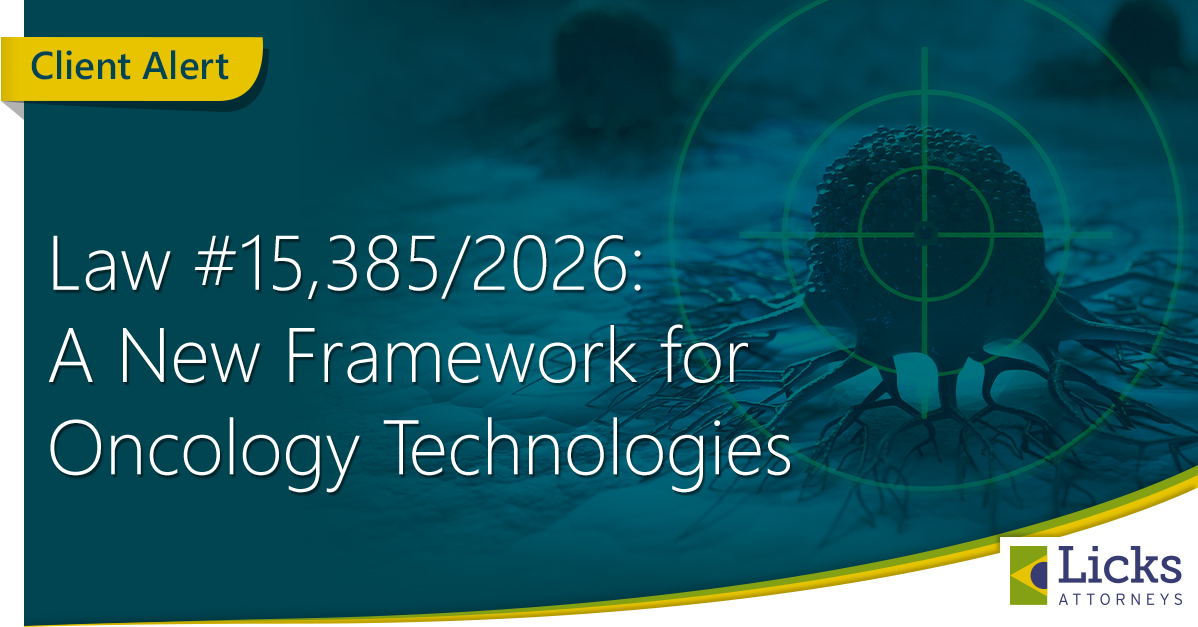
Law #15,385/2026 was published on April 10, 2026, amending the National Policy for Cancer Prevention and Control (Law #14,758/2023) with the purpose of instituting principles and guidelines relating to the development, innovation, and sanitary regulation of cancer‑related technologies within the scope of the Brazilian Unified Health System (SUS).
The law establishes an express legal definition of “cancer‑related technologies,” a category that now encompasses vaccines, medicines, medical devices, diagnostic tests, and advanced therapy products—including gene therapies and CAR‑T therapies. This definition has a direct impact on regulatory and public procurement procedures, as it standardizes the scope of application of the policy.
In the regulatory field, the law signals the creation of an environment favorable to domestic production, with an emphasis on public‑private partnerships, transparency aligned with international best practices, and integrated action among health authorities and science and technology agencies. In parallel, Article 7‑B formalizes an R&D agenda that includes the participation of biotechnology startups, the application of artificial intelligence in product development, and the use of genetic sequencing for diagnostic purposes and therapeutic personalization.
The most immediate and concrete change is the introduction of Article 15‑B: oncology vaccines, medicines, and advanced therapy products are now granted priority treatment for marketing authorization and post‑authorization variations before the Brazilian health regulatory agency (ANVISA), with application of the shortest timelines provided for under Law #6,360/1976. Companies with products falling within this category should assess the impact of this prioritization on their regulatory timelines.
Equally relevant is the preferential treatment rule in public procurement (Article 10, paragraph 5), which authorizes prioritization, in public purchases, of technologies whose active ingredient or critical component is manufactured in Brazil. This provision is particularly sensitive for foreign companies supplying products to the SUS and should be monitored in light of the Public Procurement Law (Law #14,133/2021).
Finally, Article 15‑A opens a new funding window by allowing the National Fund for Scientific and Technological Development (FNDCT) to allocate specific resources for research and development of oncology technologies in Brazil.
The law entered into force on the date of its publication. Special attention is recommended to Article 15‑B (priority treatment before ANVISA) and Article 10, paragraph 5 (preference in public procurement), whose practical effects are immediate.
For further information, please contact info@lickslegal.com.
Recent Alert
-
Anvisa and Cofepris Move Forward with the Implementation of Mutual Regulatory Recognition Frameworks
September 25, 2026 -
Ministry of Health Indicates Next Steps for ENSCEIS Regulation
September 24, 2026 -
BRPTO Launches Call for Contributions on Fast-Track for Industrial Design Applications
September 17, 2026
LINKEDIN FEED

FOLLOW US ON SOCIAL MEDIA