

MEDIA & PUBLICATIONS
The Appointment of Commissioner Otto Lobo as Brazil SEC’s Chairman

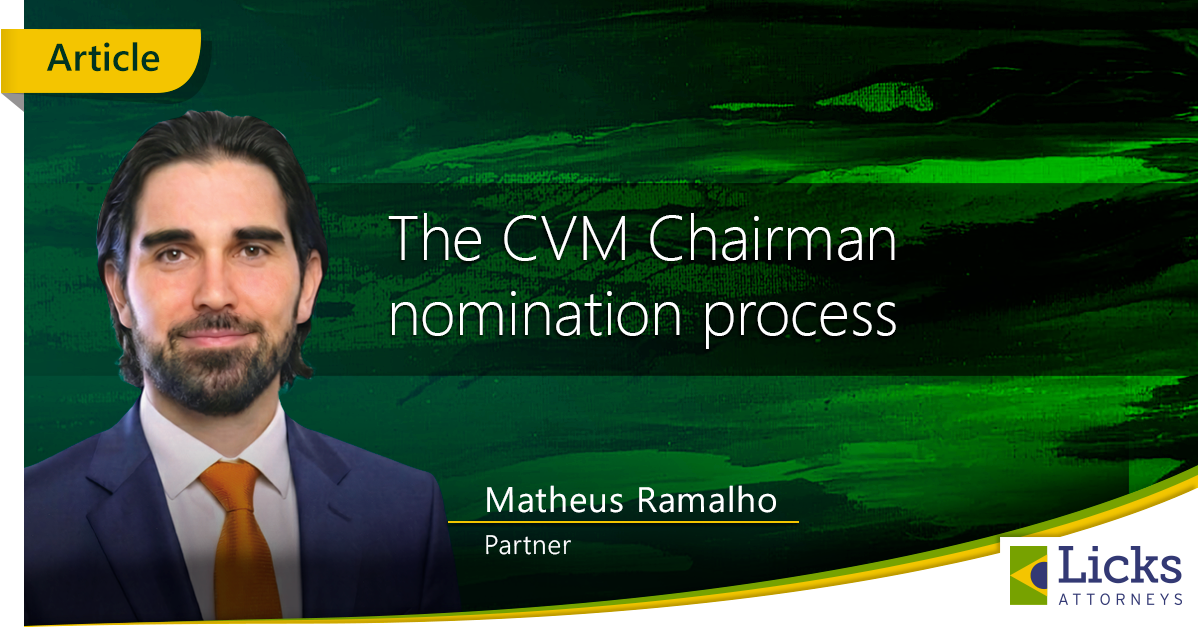
Up at the thin-aired, Everest-like heights of top appointments in Brazilian government-especially at independent watchdogs like the Brazilian Securities and Exchange Commission (Comissão de Valores Mobiliários - CVM), the process of picking a director or president is a tangled mix of rules, rivalries, and raw politics.
Let's break down the main pillars that drive these choices: solid technical chops; a spotless reputation; real alignment with whoever's doing the appointing (here, the President of Brazil for the CVM); and the brutal, cutthroat competition that comes with every vacancy.
These aren't separate boxes-they mix and clash in a way that weighs expertise against trust and the hard realities of power, making sure the pick isn't just some book-smart expert but someone who can actually play the game in the capital markets regulatory arena.
Technical Chops
First up, technical ability: this isn't some scorecard contest where the guy with the most degrees or publications takes the trophy, or about hunting for the next Joseph Flom-level legend in corporate law. "Enough" technical know-how just means the person's background and track record look compatible with the job at first glance.
Degrees and deep knowledge count, but they're not the whole story. What really matters is how someone uses that knowledge-staying cool under fire, being predictable in good ways, having street smarts in the trenches, and reading the room right. Stephen Hawking could map black holes, but he wouldn't have been your go-to guy for piloting a shuttle.
That's key because the CVM isn't some ivory-tower think tank; it's a pressure cooker where calls swing billions in market value. The gig needs more than theory-it demands practical judgment that threads through legal gray zones, economic headwinds, and public blowback with steady nerves and good foresight. Someone can crush it writing articles but freeze or fumble when deciding a messy case in the full glare of media and market scrutiny, where split-second timing and feel for the ecosystem matter just as much as textbook rules.
Spotless Reputation
At the same time, a clean reputation doesn't mean zero enemies-dive deep enough in these waters and you'll scrape some rocks-but it does mean a broadly clear record: no active probes or lawsuits hanging over you, and no pile-up of major "black marks" from past moves.
"Black marks" here are the big ethical slips or bridge-burning plays for quick wins-not minor personal drama like a bad college breakup. Why the distinction? Because today's small grudge can flip into tomorrow's deal-breaker when the wheel turns.
People don't rack up real, lasting bad blood over nothing. So vetting goes way past official court checks; it's a full-life scan where red flags-like mishandled conflicts in old jobs or shady tactics in deals-pop up as quiet vetoes. In a world where trust is the real currency, a damaged rep creates tracks that serious players can follow and exploit.
Alignment with the Appointer
Then there's the need for some personal chemistry with the person making the call. Clear the technical and rep hurdles, and the nominee is still the President's personal pick. Those earlier filters don't wipe out the human side of it.
Paulo Guedes had stellar creds and fans in certain crowds, but that didn't force President Lula to tap him. The power to choose people you trust and who get your vision is a fundamental executive perk. Alignment has to go deeper than pure resume fit.
This is where the human-strategic layer kicks in: presidents don't install machines; they pick people whose values, take on regulation, and loyalties line up with the administration's bigger goals. That keeps things cohesive when tough calls pit market freedom against investor safeguards. Skip that connection, and even the sharpest candidate can turn into an inside threat that quietly sabotages the long game.
The Cutthroat Battle for a CVM Seat
With those basics locked, zoom in: fighting for a CVM spot is insanely competitive. Everyone has their horse in the race, but until the President locks in the name and sends the shortlist forward, a ton goes down behind the scenes.
The winner is usually the one who survives endless filters. The President pulls from ABIN intel, Federal Police files, tax records, Casa Civil input, plus a web of friends and foes to build or sink candidacies. No sane executive bets on a leaky boat.
Forget the popular story that government runs on chaos-the machinery is actually super professional and layered. The "everything's broken" narrative doesn't match reality.
Only someone way outside the system thinks a decent appointed job just falls out if you shake the tree hard enough. Trust me: landing even a basic staff advisory gig takes way more political juice than acing a regular civil service exam. Trust positions are war zones.
Doubt it? Try campaigning for condo board president in a luxury building where fees top R$5,000 a month and managing gets you fee waivers. Fill that place with bankers and lawyers who know basic finance, and watch the flyers, platforms, and hardball start flying. If that's vicious at the micro level, picture the intensity for a CVM director slot.
The Technical Arms Race
Headlines called Otto Lobo's pick "political." Sure, every presidential nomination has politics baked in, but that word often doubles as code for "not technically up to snuff."
Public record shows Lobo judged cases at the National Financial System Appeals Council (the "Conselhinho"), served a full term as CVM director, grabbed a master's abroad, earned a doctorate in commercial law from USP, spent over a decade climbing to senior partner at powerhouse Motta Fernandes Rocha before starting his own shop, and taught for years at FGV-Rio.
If that resume doesn't at least presume solid fitness for the job, what's the new bar? If guys like this get dismissed as unqualified, some of us might need an upgrade just to keep up with whatever elite standard is emerging.
That's why releasing an official rundown of everyone who competed against Dr. Lobo would help. If the knock is that his pick was "political" (translation: light on tech merit), then show us the supposed superior talents who got passed over. Run the head-to-head-if Lobo loses 7-1 in a fair comparison, hardly anyone would back bumping him to president.
Sadly, that secret shortlist stays locked. Dropping the big names who supposedly dropped out would be a public service-letting Brazilians see they're not getting sold a fake.
The Reputation Contest (Fewest Black Marks Wins)
Reputation-wise, I dug hard: scanned his published votes for red flags, hunted investigations, lawsuits, tax issues, credit hits, talked to CVM old-timers, bankers, even eavesdropped on golf-course whispers. Went so far as pulling his USP doctoral thesis on financial statements.
Nothing dirty turned up. That clean slate suggests his nomination landed on someone technically solid (maybe not the single best, but compatible) who cleared every filter with the least pushback.
Wrapping It Up
Politics is the art of what's doable. Without hard proof hitting Dr. Otto Lobo's skills or integrity, some of the media noise feels like it veered into unfair territory-dissing the nominee, the government screeners, the President's call (shrunk to a political puppet play), and everyone else in the chain.
People who chalk up the Senate's low rejection rate to rubber-stamp hearings miss the real fight: the deep vetting happens way before any name hits paper. Hard to swallow that someone tapped for the CVM under the last administration, then elevated to president under this one, is secretly incompetent or toxic. Facts lean the other way.
Last I checked, Brazil's Constitution still has presumption of innocence. Judge nominees on real merits and solid evidence against them-not whispers or unbacked digs. Or maybe I'm just out of the loop.
God willing (and politics cooperating), the Senate hearing gets scheduled soon. With zero concrete negatives on the table, I'm cheering for Otto Lobo and Igor Muniz to get the green light at the CVM.
Meantime, next piece dives into the recent Ambipar ruling from the CVM board-about forcing a mandatory tender offer (OPA) via the "Related Party" angle. Majority decision, high stakes, perfect lens to watch how Lobo actually operates under fire. We'll see if his record delivers balanced, no-nonsense rulings that strengthen the agency.
RECENT PUBLICATIONS


LINKEDIN FEED

FOLLOW US ON SOCIAL MEDIA